
Mental arithmetic
Attack and support cards repeatedly practise small additions and subtractions without a worksheet.
Card game · arithmetic
Build an army from number cards, launch attacks and call for support. Every move turns into a calculation the whole table can see.
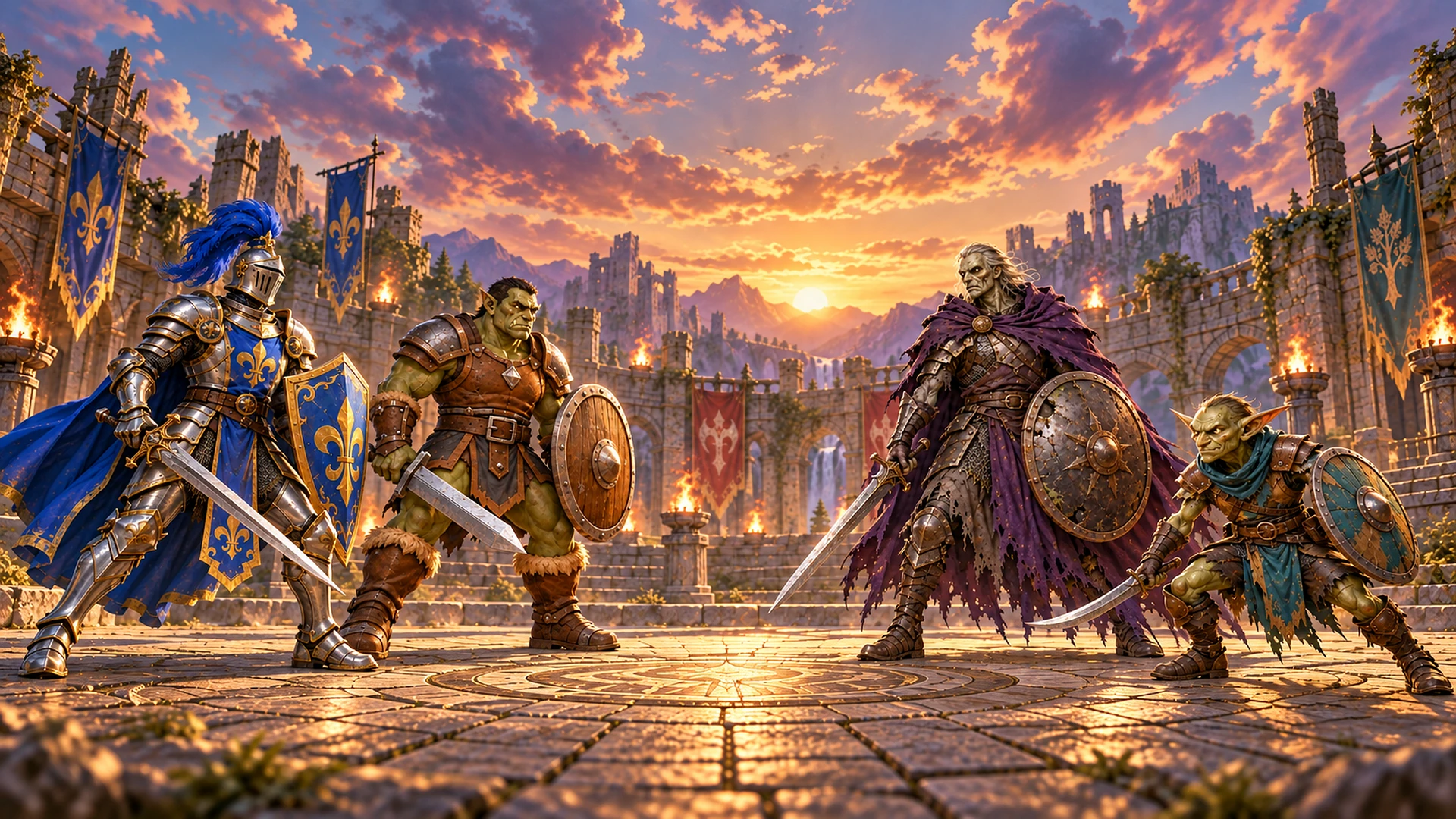 10 armies · 2 games · ready to print
The idea
Each unit card has a value. The cards in front of a player show the current size of that army. An ATTACK subtracts units, SUPPORT adds units and a patron can grant one carefully timed +5 boost.
After every change, the player rebuilds the army with a new combination of cards. A total of 7 might be 5 + 2, 4 + 3 or a single 7. The arithmetic is visible, movable and easy for another player to check.
Choose from ten armies: Knights, Zombies, Orcs, Goblins, Fairies, Wolves, Dwarves, Elves, Dragons and Trolls. With two or three players, everyone plays for themselves; four-player Battle uses two teams.
Learning through play
The calculation has an immediate purpose: it decides what happens to an army. That context makes repeated practice feel like part of the game.
Attack and support cards repeatedly practise small additions and subtractions without a worksheet.
Rebuilding an army shows that one total can be made from several different combinations.
Players choose between attacking, taking support or saving their one-use patron for later.
Four clear steps
Begin at 10 units for the easiest game. Move to 15 or 20 only when every player is comfortable with the range.
Each player chooses an army, places unit cards worth 10, 15 or 20 in front of them and keeps the remaining unit cards as a reserve. Put the +5 patron face up.
On a turn, draw one ATTACK against an opponent, draw one SUPPORT for your own army, or use your patron once for +5.
Work out the new total aloud, then rebuild the affected army from any matching combination of its unit cards.
An army at 0 is defeated. With two or three players, the last army wins; with four players, the surviving team wins.
Adjust the game
Attacks and support practise addition and subtraction. Choose one of three difficulty levels:
Use attacks −1 to −3 and support +1 to +3. Agree on 10 as the highest total if you want a firm ceiling.
Use attacks −1 to −5 and support +1 to +5. The larger range creates more ways to rebuild an army.
Use the whole deck, including −6 attacks. Play without a ceiling when everyone is ready.
For a faster second game, every player flips one army card. The highest value wins the round; tied leaders flip again. Most won rounds wins.
Each player uses the 18 cards of one army. Leave ATTACK, SUPPORT and patron cards aside. The game ends when a player cannot reveal a card at the start of a round. If cards run out during a tie, no point is awarded for that last round.
Free
Download the rules, five army packs, action cards and optional Battle Logs separately. For two-player Battle, choose an army pack and one action set (I or II). For three or four players, use four armies and both action sets. Duel needs only army unit cards. Card labels and logs are in English; the Czech and English rule booklets are available separately.
A4 · 100% scale · 2 army packs + 2 action sets
Optional worksheets for written calculations. Record changes under MY ARMY and attacks under ENEMY ARMY with the target army's initial, for example O: 10 − 2 = 8.
Download PDFVM Fantasy Battle
Choose an army to learn about its story, patron and cards.

They defend their kingdom with strength, discipline and sturdy armour.
Learn more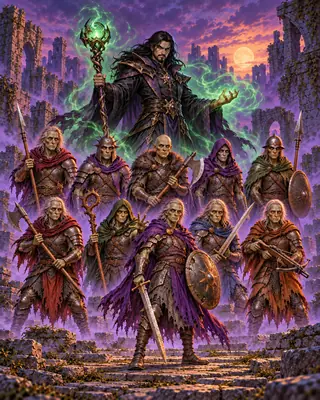
They keep advancing under the Necromancer's command.
Learn more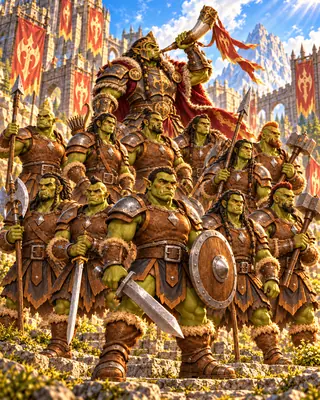
Strength and resilience led by a determined chieftain.
Learn more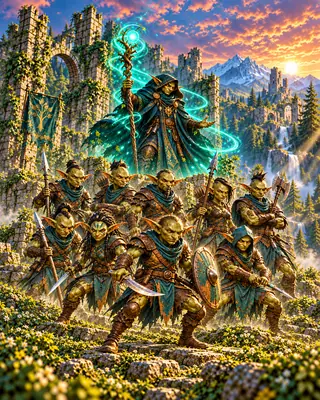
Quick and cunning fighters guided by their shaman.
Learn more
Agile forest fighters led by the Emerald Queen.
Learn more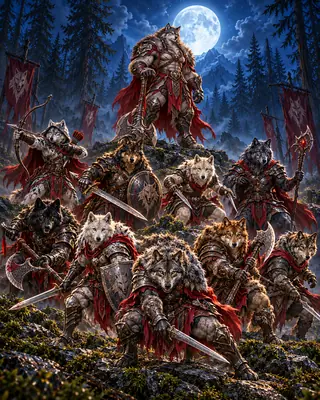
The pack relies on speed, teamwork and instinct.
Learn more
Stout defenders of mountain strongholds, led by their king.
Learn more
Precise fighters drawing strength from forest magic.
Learn more
A mighty flight of dragons protected by their patron.
Learn more
Mighty, resilient fighters led by their crowned champion.
Learn moreFAQ